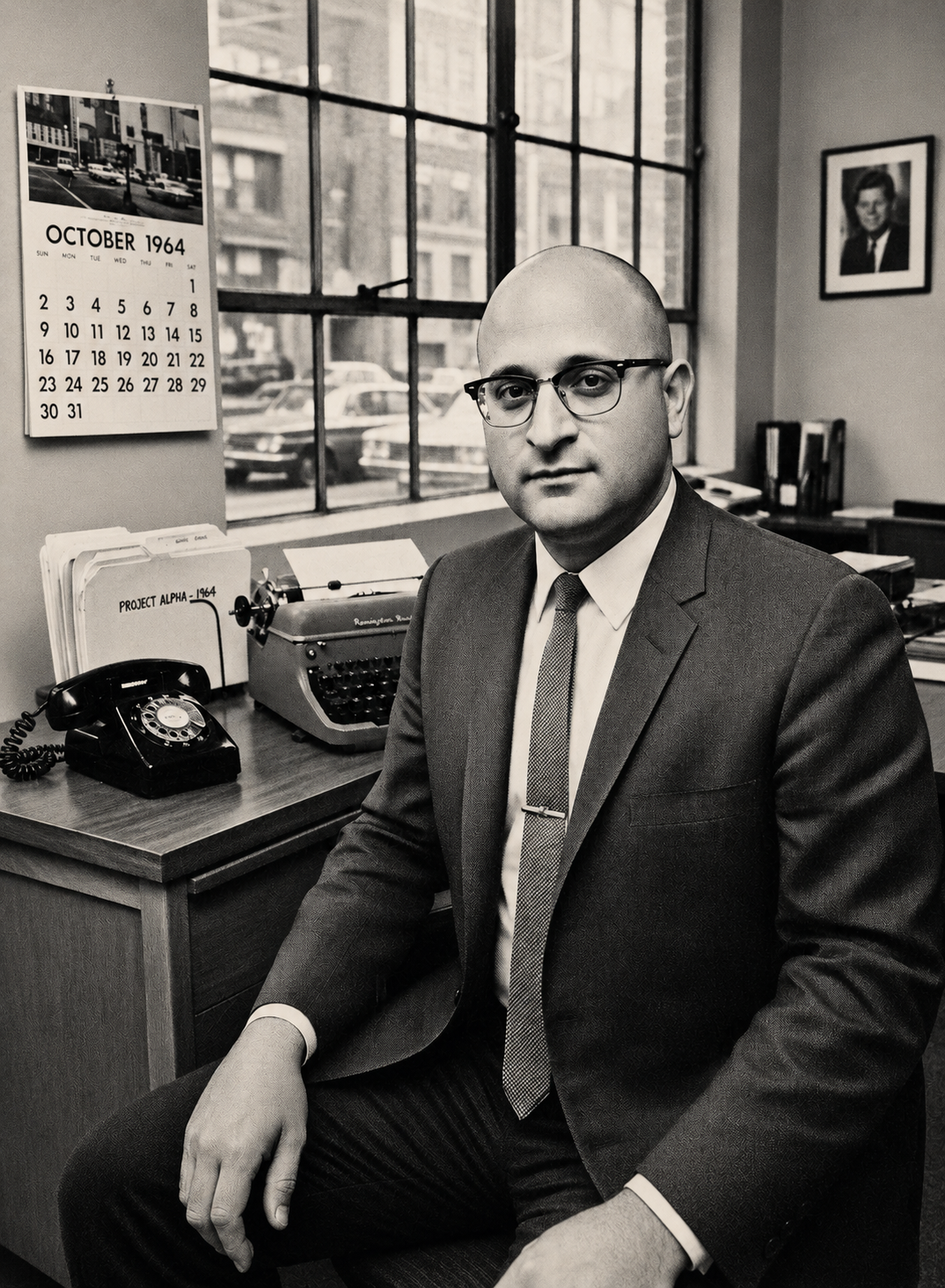
DALLAS, Jan. 25, 1965 (Courier-Ledger Wire) — With jury selection three weeks off and courtroom seating in Courtroom 102 limited to a few dozen spectators, a producer newly arrived from New Jersey is preparing to bring the case to a far larger audience than the room can hold.
Nicholas Kilburn's plan, confirmed this week, calls for a dramatized, transcript-based account of the trial: opening statements, testimony, and closing arguments, assembled from the official record and produced for broadcast in twelve parts, beginning the day the gavel falls.
"Not only in the U.S. but around the world, this case has garnered huge interest. Everything about President Kennedy, his family, the assassination, and the guilt or innocence of Lee Harvey Oswald is on everyone's minds and lips. This is a unique opportunity to provide listeners all over the world a chance to be an eleventh juror of sorts, to hear all of the evidence and testimony, in real time, and truly be able to judge for themselves if Oswald did it," Kilburn said, seated in an office stacked with case folders.
Not everyone in the legal community is convinced a criminal trial belongs on the airwaves at all. "The last thing this trial needs to be is a circus. Broadcasting it would only fan the flames of turning a serious trial into a cheap court of public opinion. There is a reason why the Supreme Court, for example, bars cameras and the broadcasting of its court hearings, to protect the decorum and independence of the judicial process. Broadcasting this could cause attorneys and judges to grandstand for the public, and that news outlets might sensationalize or distort complex legal arguments with short, out-of-context clips," said retired Judge Robert A. Miller, formerly of the Dallas County bench.
Kilburn's answer is that the public already has an opinion about Oswald, most of it formed before a single witness has been sworn in. "The record deserves better than a headline," he said. "Let people hear it argued, in order, the way the jury will."
Whether Dallas is ready to have its courthouse case carried into homes across the country remains an open question. The trial is set to open March 1.